






 كل المقالات
So far, Hezbollah has avoided taking an explicit position on a possible military engagement. However, Lebanese Parliament Speaker Nabih Berri—an influential Shiite figure and close Hezbollah ally—has been adamant: Lebanon will not participate in this conflict. He justifies this position on several grounds, including the country's inability to bear the consequences of a new war, in a context of persistent economic and institutional crisis. Furthermore, according to him, Iran does not require direct support, given its military power, particularly in the field of ballistic missiles.
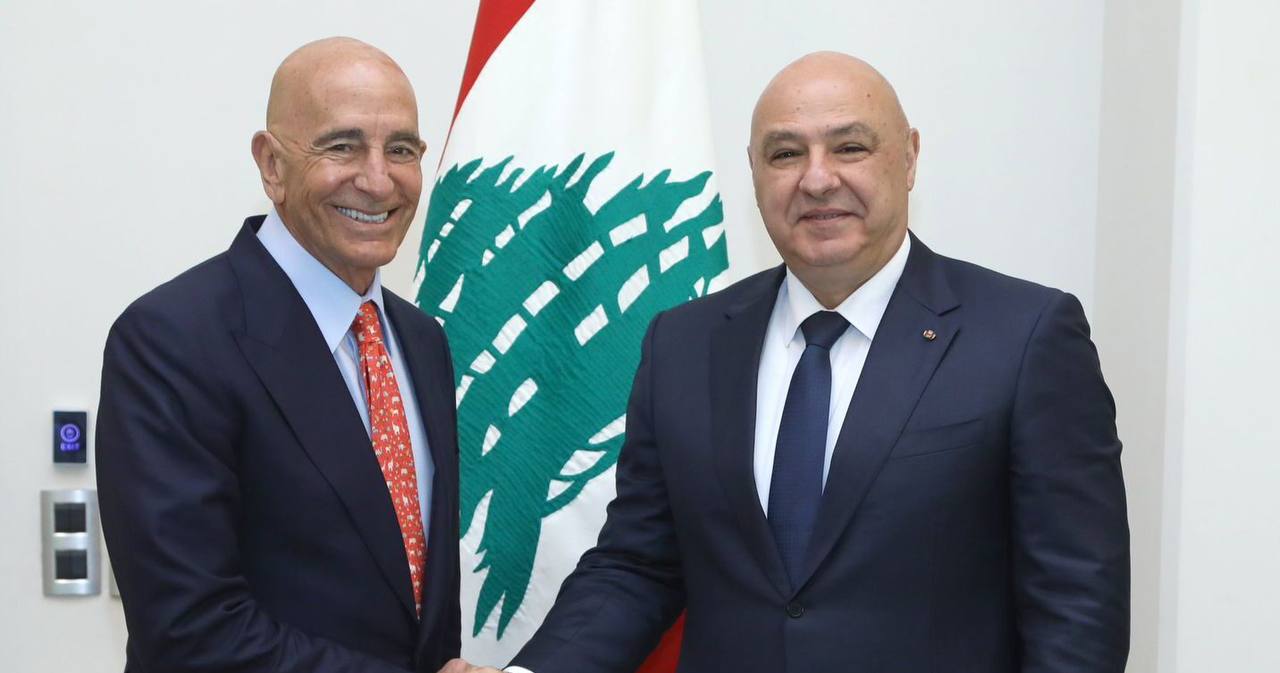
However, the direct US military intervention—through strikes targeting Iranian nuclear facilities—has revived the question of the involvement of Iran's regional allies, foremost among them Hezbollah. In this context, the US ambassador to Turkey, Thomas Barack, who is also responsible for Lebanon and Syria, visited Beirut on the eve of the US strikes. He sent a clear message to the Lebanese authorities, particularly Nabih Berri: any intervention by Hezbollah in this conflict would have serious consequences for all of Lebanon.
This message was taken very seriously by Lebanese officials, as evidenced by the publication of two official statements: one from the President of the Republic, General Joseph Aoun , and the other from Prime Minister Nawaf Salam. Both reaffirmed Lebanon's neutrality in this confrontation, while expressing their solidarity in principle with Iran, as the country under attack.
For its part, Hezbollah issued a statement expressing its "total solidarity with the Iranian leadership and the Revolutionary Guards," while affirming its confidence in their ability to "deter aggression and confront the Americans and the Zionists." It also called on the United Nations and the International Atomic Energy Agency to take steps to prevent a nuclear disaster.
Thus, official Lebanon opts for neutrality, while Hezbollah adopts an ambiguous stance, suggesting that, for the time being, Lebanese territory will remain outside the battlefield. This is for various reasons, chief among them the still-seen aftereffects of the last war with Israel.
But two key questions remain unanswered:
1. If Iran found itself in a critical situation, would its main ally, Hezbollah, truly remain neutral?
2. Will Israel wait for a hostile gesture from Lebanon to open a new front, or will it take the initiative?
So many questions still remain, while certain circles close to the Iranian axis in Beirut believe that this conflict is approaching its resolution, the American intervention having been "calibrated to send a strong message without overthrowing the regime in Tehran."
Indeed, despite the strikes that have affected Iran's nuclear program and ballistic missile arsenal, neither the United States nor Israel seem capable of bringing down a deeply entrenched regime, the ousting of which would require a near-impossible ground intervention, given the vastness of Iran's territory (nearly 1.7 million km²) and a population of around 90 million.A person close to Iranian decision-making circles summed up the situation thus:
"The war could weaken Iran militarily, but it will have no major political effect. The issue here is the survival of the regime. The rest is secondary."
 كل الحقوق محفوظة
  تصميم وتطوير